 Referrals
Referring an adult into supported housing
The information that helps a referral move quickly — and the gaps that hold one up for weeks.
Read article
The phrase “supported accommodation” gets used loosely — sometimes for a hostel with a staff rota, sometimes for a flat with a weekly phone call. So here is what it means with us, without the sales language.
Read the article
Referrals
The information that helps a referral move quickly — and the gaps that hold one up for weeks.
Read article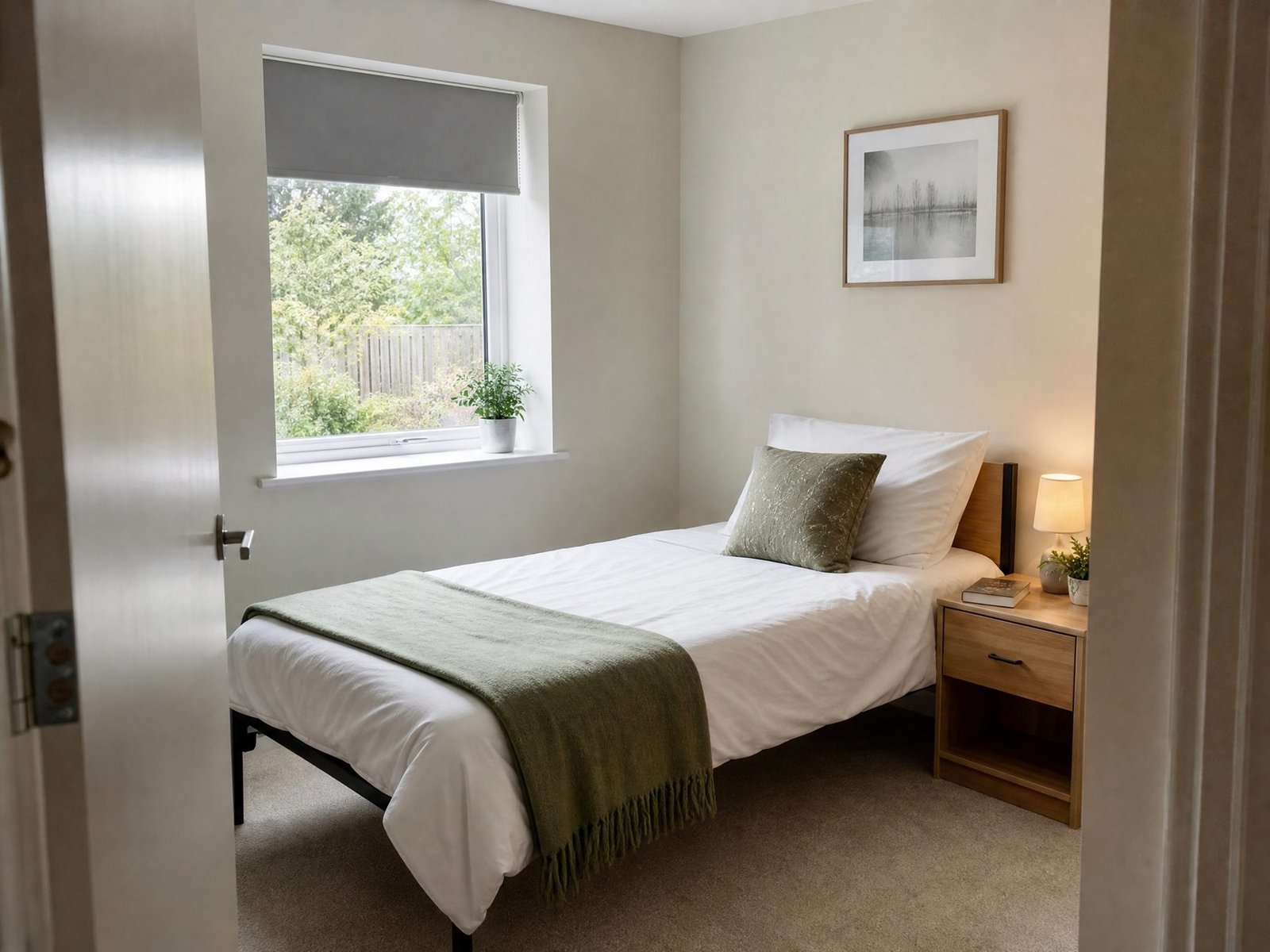 Tenancy
Why supported tenancies are often priced in two parts, and what each part actually pays for.
Read article Support
Before budgeting apps and career plans, there are basics that make everything else possible.
Read article Landlords
Who is the tenant, who maintains what, and what happens at the end of the term.
Read article Safeguarding
What happens after a concern is reported, who is involved, and what residents are told.
Read article Moving in
The paperwork, the induction, and the first few days in a new home.
Read articleWe would rather answer a difficult question now than have it become a problem later.
Supported accommodation is housing plus a service. The housing part is simple: a room, a tenancy, and shared facilities. The service part is where definitions start to drift.
With us, it means you hold your own tenancy for a room in a shared house, and you receive planned support from a named key worker. The support is not a condition of your tenancy in the sense that it is imposed — it is the reason the tenancy is viable in the first place.
It is not a care home. We do not provide personal care, nursing or 24-hour staffing on site. It is also not a hostel: there is no curfew and no shared dormitory. If someone needs a higher level of care than we can safely deliver, we will say so and point towards a provider who can.
Supported accommodation works when the person wants to be there and is willing to engage with support at some level. Where somebody is not ready for that, a different setting is usually the better answer — and pretending otherwise helps nobody.
A referral does not need to be a statutory assessment. It needs to answer three questions: who is this person, what do they need, and what is the risk?
Missing consent is the most common delay. The second is a referral written entirely about risk with nothing about the person — we cannot assess suitability from a list of incidents alone. A paragraph about what somebody wants, and what they are good at, is genuinely useful.
We acknowledge within one working day, ask anything missing, and give a clear answer: yes with a timescale, or no with a reason. A slow maybe is worse than a quick no, because it stops you looking elsewhere.
Supported tenancies are often priced in two parts: net rent for the room, and a separate utility charge covering energy and shared services. This is not a trick — but it does need explaining properly.
In a shared house there is usually one energy supply and one set of communal costs. Rather than dividing a fluctuating bill between residents each month, the utility charge is a fixed weekly amount, reviewed annually. It means the cost is predictable and arrears do not appear out of nowhere after a cold winter.
Ask for the exact figures, the review date, and what happens if your circumstances change. If any of that is unclear, do not sign until it is. That applies to any landlord, including us.
Independence is not one big leap. It is a set of small, boring competencies that compound. These are the five we usually start with.
Planning three or four cheap meals, shopping for them, and cooking them without a crisis. It sounds basic; it is the difference between a stable week and a chaotic one.
A twenty-minute daily routine beats a four-hour panic clean before an inspection. We practise the routine, not the panic.
What comes in, what goes out, what is committed. A weekly budget that fits on one page is more use than an app nobody opens.
Opening the letter, understanding what it wants, and replying in time. Avoidance is the mechanism by which small problems become tenancy-ending ones.
The most important skill on the list. Knowing who to call, and calling before the situation is unrecoverable, is what sustains a tenancy long-term.
In a supported housing arrangement, the provider usually becomes your tenant. You lease the whole property to Live Safe Housing C.I.C.; we then grant individual tenancies to residents.
Your rent comes from us as an organisation, not from an individual's benefit claim. That removes the lag between a claim starting and rent being paid — usually the point where private lettings to vulnerable tenants fall apart.
The property is returned in the condition recorded at handover, subject to fair wear and tear. We would rather agree an exit plan early than argue about a deposit later.
Safeguarding is the practice of noticing something and doing something about it. It applies to residents, to their visitors, and to the conduct of staff.
Tell your key worker, call the office, or message the WhatsApp number. If you would rather not speak to us, you can contact the local authority safeguarding team directly — and we will never penalise anyone for doing that.
If someone is in immediate danger, call 999. Do not wait for office hours and do not wait for us to respond to a message.
Move-in day should be calm and predictable. Here is the shape of it.
You will have seen the room, read the tenancy terms, and had the chance to ask questions. Bring identification and anything you need for the first night — bedding is provided, but personal items are yours to bring.
The priority is settling, not performing. Benefits, registrations and routines get sorted in a planned order. If something is not working, say so early — that is exactly what the support is for.
Chat with us